
Best CFD brokers in Canada
2 of the 7 brokers we review accept residents of Canada. XTB is our top pick. Availability last checked 6 October 2026.
How we score
Each broker gets five sub-scores out of 5:
Regulation and safety (30%), trading costs (25%), platforms and tools (20%), range of markets (15%) and ease of use (10%). The overall score is the weighted average, rounded to one decimal.
Availability is checked against each broker's published country lists. The ranking order is editorial and reflects our commercial agreements, so it does not always follow the scores. Full methodology
Advertiser disclosure
Broksal is free to use because some brokers pay us a commission when you open an account through our links. This can influence which broker we feature and the order in which brokers appear.
Commissions never change the facts we publish about regulation, fees or country availability, and they cost you nothing.
- 1
Our top pick in Canada

XTB
4.8Own platform, no minimum deposit, commission-free stocks and ETFs within a monthly limit
- Minimum deposit
- No minimum
- Platforms
- xStation 5 (web & desktop), XTB mobile app
- Entity for Canada
- XTB International Limited — Offshore entity
- CFDs
- Yes
Show pros, cons and feesHide details
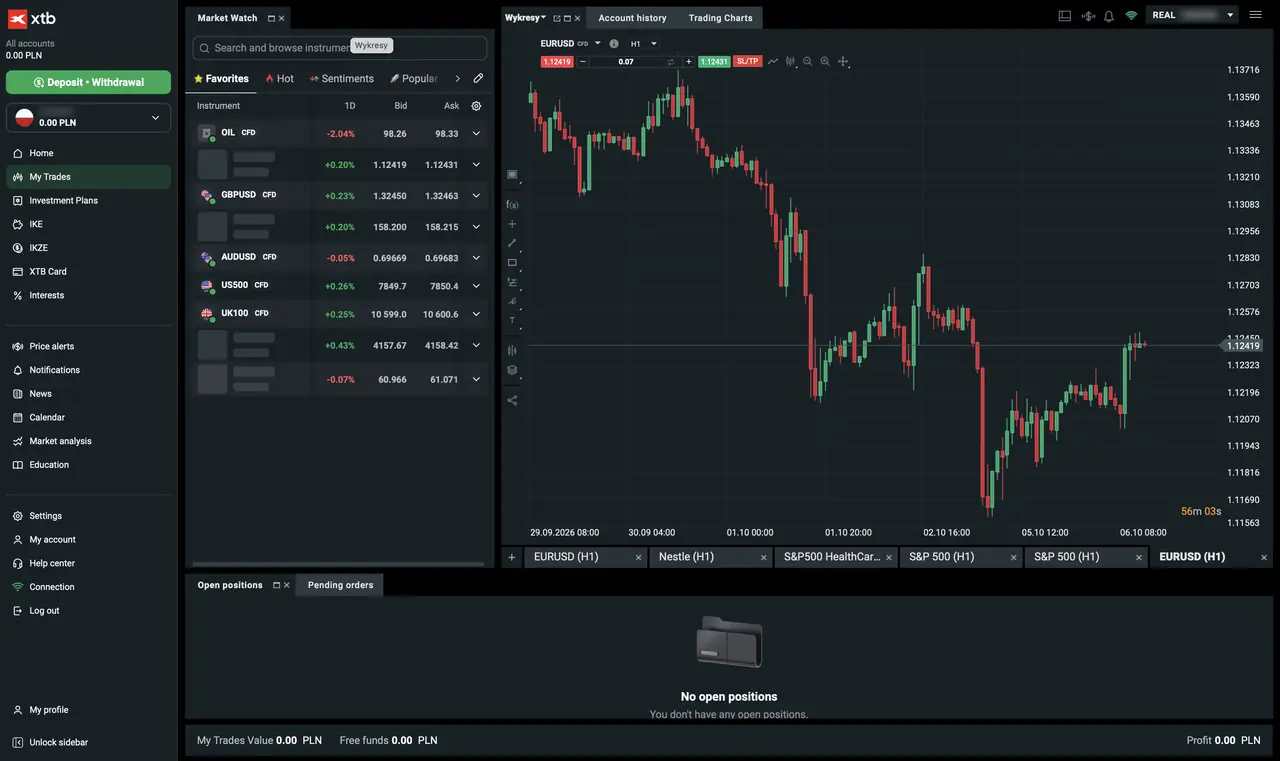
xStation 5: Market Watch with sentiment tabs on the left, an EUR/USD hourly chart with one-click order entry, and open positions below. Account number blurred. What we like
- Publicly listed in Warsaw with KNF, FCA and CySEC oversight
- No minimum deposit
- xStation 5 is fast, clean and has built-in market sentiment and calendars
- Real stocks and ETFs commission-free up to €100,000 monthly turnover
Watch out for
- No MetaTrader or cTrader
- Since March 2026 the international entity accepts residents of only a short list of countries
- Inactivity fee after 12 months without trading
Fees
CFDs are priced through the spread on the Standard account. Real stocks and ETFs are commission-free up to €100,000 of monthly turnover, then 0.2% (minimum €10). Currency conversion and overnight swap costs apply.
Best for
Beginners and active traders who want one app for CFDs and real stocks.
- 2

Interactive Brokers
4.7The widest market access here, with low costs and top-tier regulation
- Minimum deposit
- No minimum
- Platforms
- Trader Workstation (TWS), IBKR Desktop, Client Portal (web) +2
- Entity for Canada
- Interactive Brokers LLC / regional affiliate — Top-tier regulators
- CFDs
- Yes
Show pros, cons and feesHide details
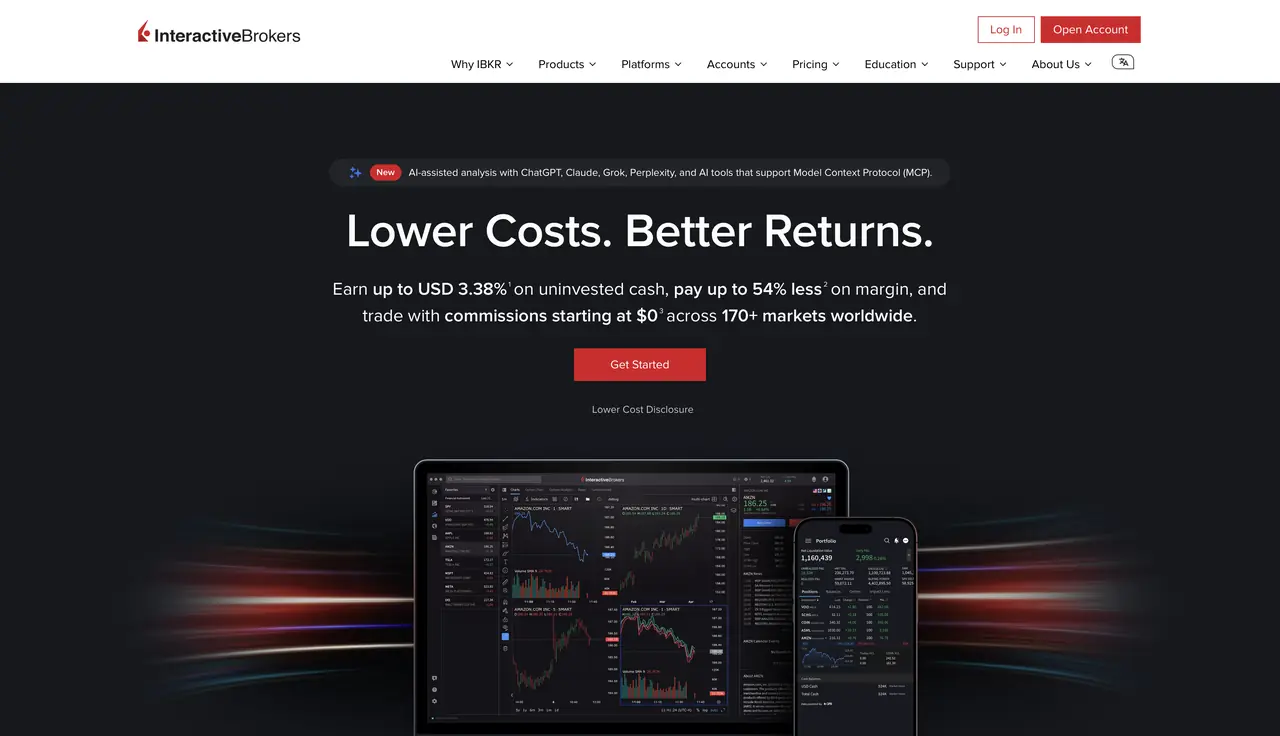
Interactive Brokers homepage, showing the desktop platform and mobile app and the new AI-assisted analysis integrations. What we like
- Listed on Nasdaq and regulated by top-tier authorities worldwide
- Access to stocks, options, futures and bonds on 150+ markets
- No minimum deposit and no inactivity fee
- Accepts residents of most countries
Watch out for
- Trader Workstation has a steep learning curve
- CFDs are not available to US residents
- Account opening asks for more documents than most brokers
Fees
Two pricing plans: Fixed (one all-in commission) and Tiered (lower exchange-based commission plus pass-through fees). CFD commissions are charged per trade, with financing on overnight positions. There is no inactivity fee.
Best for
Experienced investors who want access to global exchanges.
CFDs are complex instruments and come with a high risk of losing money rapidly due to leverage. Most retail investor accounts lose money when trading CFDs. Consider whether you understand how CFDs work and whether you can afford to take the high risk of losing your money. Each broker publishes its own current loss percentage on its website.
Trading from Canada: what to know
Canadian residents have fewer choices: XTB serves Canada through its French branch and Interactive Brokers through a CIRO-regulated Canadian entity. XM, IC Markets, IQ Option and eToro do not accept Canadians.
Tax
Trading profits are taxed either as business income or as capital gains with a 50% inclusion rate; the planned increase of the inclusion rate was cancelled in 2025. Frequent trading points towards business income. This is general information, not tax advice.
Trading CFDs from Canada: the rules
Financial services in Canada are supervised by the Canadian Investment Regulatory Organization (CIRO). International brokers usually onboard residents of Canada through an offshore entity, where leverage can be higher and investor protection is weaker than in the EU, UK or Australia. Check which entity you sign with and whether local rules restrict trading with foreign brokers.
Which entity will you sign with?
Most brokers run several regulated companies and assign you one based on where you live. For residents of Canada, this is typically:
| Broker | Entity | Regulator |
|---|---|---|
| XTB | XTB International Limited | Offshore entity |
| Interactive Brokers | Interactive Brokers LLC / regional affiliate | Top-tier regulators |
The broker confirms the entity during sign-up. Always check the legal name in your client agreement.
Brokers not available in Canada
XM, IC Markets, Freedom24, IQ Option and eToro do not accept residents of Canada according to their published country lists. Opening an account with false residency details breaks the broker's terms and can get your account closed with funds frozen.
- XM review · XM alternatives
- IC Markets review · IC Markets alternatives
- Freedom24 review · Freedom24 alternatives
- IQ Option review · IQ Option alternatives
- eToro review · eToro alternatives
Frequently asked questions
What is the best CFD broker in Canada?
XTB is our top pick for residents of Canada. Own platform, no minimum deposit, commission-free stocks and ETFs within a monthly limit.
Which brokers accept traders from Canada?
Of the brokers we review, XTB and Interactive Brokers accept residents of Canada.
Which brokers are not available in Canada?
XM, IC Markets, Freedom24, IQ Option and eToro do not accept residents of Canada according to their published country lists.
Is CFD trading legal in Canada?
Rules differ by country. Brokers that accept residents of Canada do so under their own licences, but local law may restrict trading with foreign brokers or moving money abroad. Check with the Canadian Investment Regulatory Organization (CIRO) if unsure.
Do most traders lose money with CFDs?
Yes. Regulated brokers must publish the share of retail accounts that lose money, and it is typically well above half. Only trade with money you can afford to lose.